Soft Washing for Pristine Exteriors — Professional Methods, Benefits, and Practical Steps
Soft washing is a low-pressure exterior cleaning approach that uses carefully measured, biodegradable solutions plus dwell time to lift and eliminate organic growth without harming surfaces. This guide covers how soft washing works, how it differs from pressure and power washing, and why surface-specific methods give longer-lasting, non-destructive results for roofs, siding, decks, fences, stucco, and concrete. Many homeowners wrestle with recurring algae, mold, mildew, and moss that age materials and drag down curb appeal. Soft washing treats the biological cause instead of merely blasting away what’s visible. Read on for a clear explanation of the chemistry and dwell-time technique, the contaminants we target, a practical comparison with other cleaning methods, and step-by-step advice for common materials. We also address environmental considerations, maintenance planning, and how professionals use local knowledge and warranties to secure safe, durable outcomes. Keywords like soft washing, low pressure exterior house cleaning, biodegradable soft wash solutions, and soft wash roof cleaning Manitoba are included to help people find and plan these services.
What Is Soft Washing and How Does It Deliver Clean, Protected Surfaces?
Soft washing combines low-pressure application with biodegradable detergents and surfactants to remove—and sanitize—organic growth on exterior surfaces. The process is straightforward: a formulated solution clings to the growth, disrupts cell walls or adhesives through chemical action, then a gentle rinse carries away the loosened material without harming the substrate. That residual chemical action helps delay regrowth, which is the key difference from high-pressure cleaning that only strips the surface. Understanding this chemistry-plus-dwell approach explains why soft washing is preferred for delicate materials and where longevity and material preservation matter most. Below we break down the equipment and the common contaminants so you can see how the technique is applied in practice.
How Soft Washing Combines Low Pressure with Biodegradable Solutions
Soft washing operates at pressures well below those that cause damage, relying on chemical dwell time to do the heavy lifting. Technicians use low-pressure pumps and nozzles to apply mixes of surfactants, oxidizers or biocides, and biodegradable detergents formulated to break down organic matter at a biological level. The solution is left on the surface for a set period so active ingredients can sanitize root structures and weaken adhesives; a careful, low-pressure rinse then removes residue and loosened growth. This chemistry-first approach lowers the risk to shingles, stucco, vinyl, and painted finishes, and modern biodegradable formulas reduce environmental impact when used and rinsed responsibly. Knowing which contaminants are present helps determine the right dwell and dilution for lasting results.
Which Contaminants Does Soft Washing Remove Effectively?
Soft washing targets biological contaminants that attach to surfaces and cause staining, material degradation, and potential health concerns—most commonly algae, mold, mildew, moss, and lichen. Algae and mildew form thin biofilms that dull siding; moss and lichen can lift shingles and trap moisture. By chemically disrupting these organisms’ cells and their adhesives, soft washing reduces regrowth compared with water-only rinses that leave roots intact. Controlling these organisms not only improves a home’s appearance but also helps preserve finishes and reduces moisture-related damage, which feeds into the method’s long-term benefits for lifespan and curb appeal.
Key Benefits of Soft Washing for Your Exterior Surfaces

Soft washing delivers practical, financial, and environmental advantages by safely removing organic growth and producing longer-lasting aesthetic and structural improvements. The main benefits are surface preservation (less abrasion), extended material life for shingles and siding, improved curb appeal, and reduced mold- and mildew-related health risks. Because the process sanitizes rather than blasts, you’ll see fewer repairs and delayed replacements; the residual action of the chemicals also slows regrowth, meaning fewer repeat cleanings. The following section focuses on roof and siding protection and connects visual improvements to property value and maintenance planning.
How Soft Washing Protects and Extends Roofs and Siding
Soft washing removes organisms that trap moisture, create acids, or physically lift materials—each of which speeds deterioration when ignored. On asphalt shingles, algae and moss hold moisture and can wear away the granule layer, increasing the chance of leaks; treating the biological source reduces that risk. On siding—vinyl or painted wood—neutralizing biological stains with surfactant-backed solutions preserves finishes far better than abrasive, high-pressure cleaning. Regular soft-wash maintenance can lower the frequency of repairs, delay full replacements, and sometimes improve energy performance when cleaner surfaces reflect heat more effectively. Conservative application plus protective chemistry delivers measurable life-extension benefits.
Typical outcomes homeowners can expect:
- Less biological reattachment: Properly applied biocides reduce recurrence.
- Reduced mechanical wear: Low pressure avoids surface abrasion.
- Fewer premature replacements: Preserved materials mean lower long-term costs.
How Soft Washing Boosts Curb Appeal and Property Value
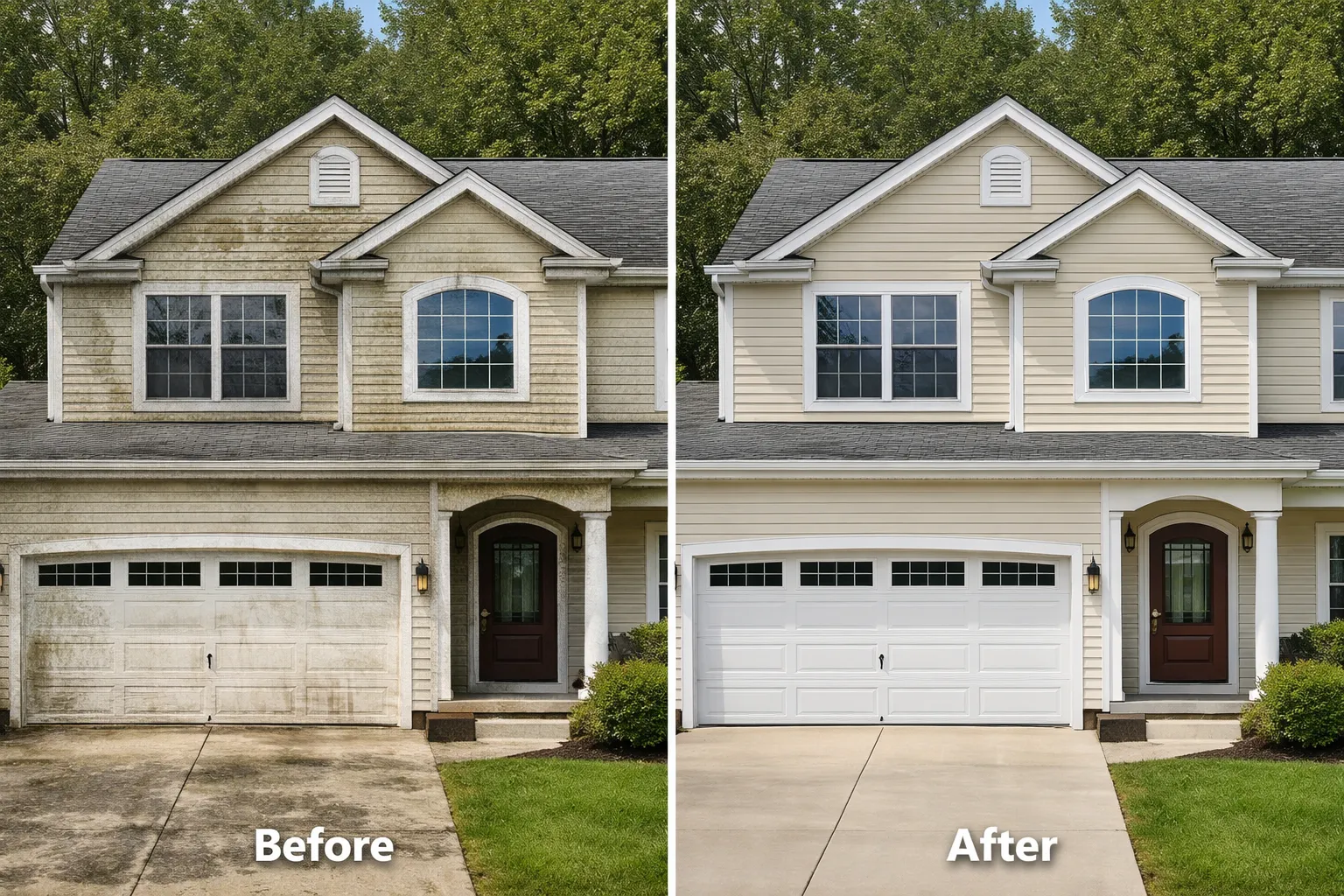
Soft washing restores color, contrast, and the look of attentive maintenance by removing organic staining that obscures architectural detail. A clean exterior creates a stronger first impression for buyers and improves listing photos and in-person showings; a well-maintained home often sells faster and for a better price. Regular soft washing as part of scheduled upkeep signals care to potential buyers and prevents the heavy soiling that can dampen perceived value. For best results, pair annual or biennial soft washing with preventative roof treatments and small touch-ups to protect your investment over time.
Quick curb-appeal tips:
- Book cleaning before peak landscaping or listing seasons.
- Pair soft washing with minor touch-ups (gutters, trim paint) for bigger visual impact.
- Keep a simple maintenance schedule to avoid heavy re-soiling that needs intensive work.
| Surface | Primary Benefit | Typical Impact |
|---|---|---|
| Roofs | Longer service life | Slows biological degradation; helps support warranty expectations |
| Vinyl siding | Color and finish restoration | Removes biofilm without warping or etching |
| Decks & fences | Cleaning and prep | Removes organic stains before sealing or staining |
| Stucco | Gentle sanitation | Preserves texture and reduces water-intrusion risk |
| Concrete (light soiling) | Surface brightening | Clears organic staining; deep-set stains may need pressure treatment |
This overview shows how soft washing’s low-pressure, chemistry-first approach preserves materials while restoring appearance, helping you choose the right method for each job.
How Soft Washing Stacks Up Against Pressure and Power Washing
Soft washing, pressure washing, and power washing sit on a continuum defined by pressure, heat, and the role of chemicals. Soft washing relies on low pressure and dwell-time chemistry to sanitize biological growth; pressure washing uses mechanical force (medium PSI) to remove dirt and loose coating; power washing adds heat for heavy oils and industrial grime. Surface safety follows the same scale: soft washing is safest for shingles, painted wood, and delicate materials; pressure or power methods suit concrete, metal, and heavily soiled areas where the substrate is more robust. The table below summarizes key differences to help you select the right approach.
| Method | Pressure (PSI) | Chemicals | Best For | Risk of Damage | Longevity of Results |
|---|---|---|---|---|---|
| Soft Washing | Low (chemical-driven) | Biodegradable detergents and biocides | Roofs, siding, stucco, painted surfaces | Low | High (slower regrowth) |
| Pressure Washing | Medium | Mild detergents optional | Concrete, rated decks, metal surfaces | Medium (abrasion possible) | Medium |
| Power Washing | Medium-high + heat | Detergents with hot water | Grease, oil, industrial grime, heavy stains | High (can strip coatings) | Short to medium (depends on substrate) |
Differences in Methods and Surface Safety
The clearest technical difference is the balance between mechanical force and chemical action. Soft washing shifts that balance toward chemistry and dwell time; pressure and power methods lean on shear and, in power washing, heat. Soft-wash pressures are low enough to avoid dislodging shingles or etching siding; higher-pressure work can tear wood fibers, lift shingle granules, or force water into seams if used improperly. Typical damage scenarios include stripped paint, granule loss on roofing, and grout erosion. To prevent problems, professionals use test patches, controlled nozzle selection, protective coverings, and runoff management—steps that protect materials and reduce liability during cleaning.
Which Surfaces Suit Soft Washing vs. Pressure Washing?
Soft washing is ideal for surfaces that host biological growth or are vulnerable to mechanical abrasion; pressure or power washing fits hard, uncoated surfaces with heavy soiling. Use soft washing on asphalt shingles, vinyl siding, painted wood, stucco, and composite decking; reserve pressure or power methods for concrete driveways, industrial areas, and oil-stained surfaces. Some situations benefit from hybrid approaches—soft-wash pre-treatment followed by localized, controlled pressure cleaning for stubborn spots. When unsure, consult a trained professional to match method, contaminant, and substrate for a safe, effective result.
Which Exterior Surfaces Respond Best to Soft Washing?
Soft washing applies to a wide range of residential and commercial exteriors when the main issue is biological staining or light soiling and when preserving the substrate matters. Common targets are roofs (asphalt and some architectural shingles), vinyl siding, painted or stained wood, composite decking, fences, and stucco. Each material needs specific checks—inspection, adjusted concentrations, correct dwell time, and appropriate rinse technique—to get great results without harm. The sections below outline typical step-by-step procedures and material-specific dos and don’ts.
How We Apply Soft Washing to Roofs, Siding, Decks, and Fences
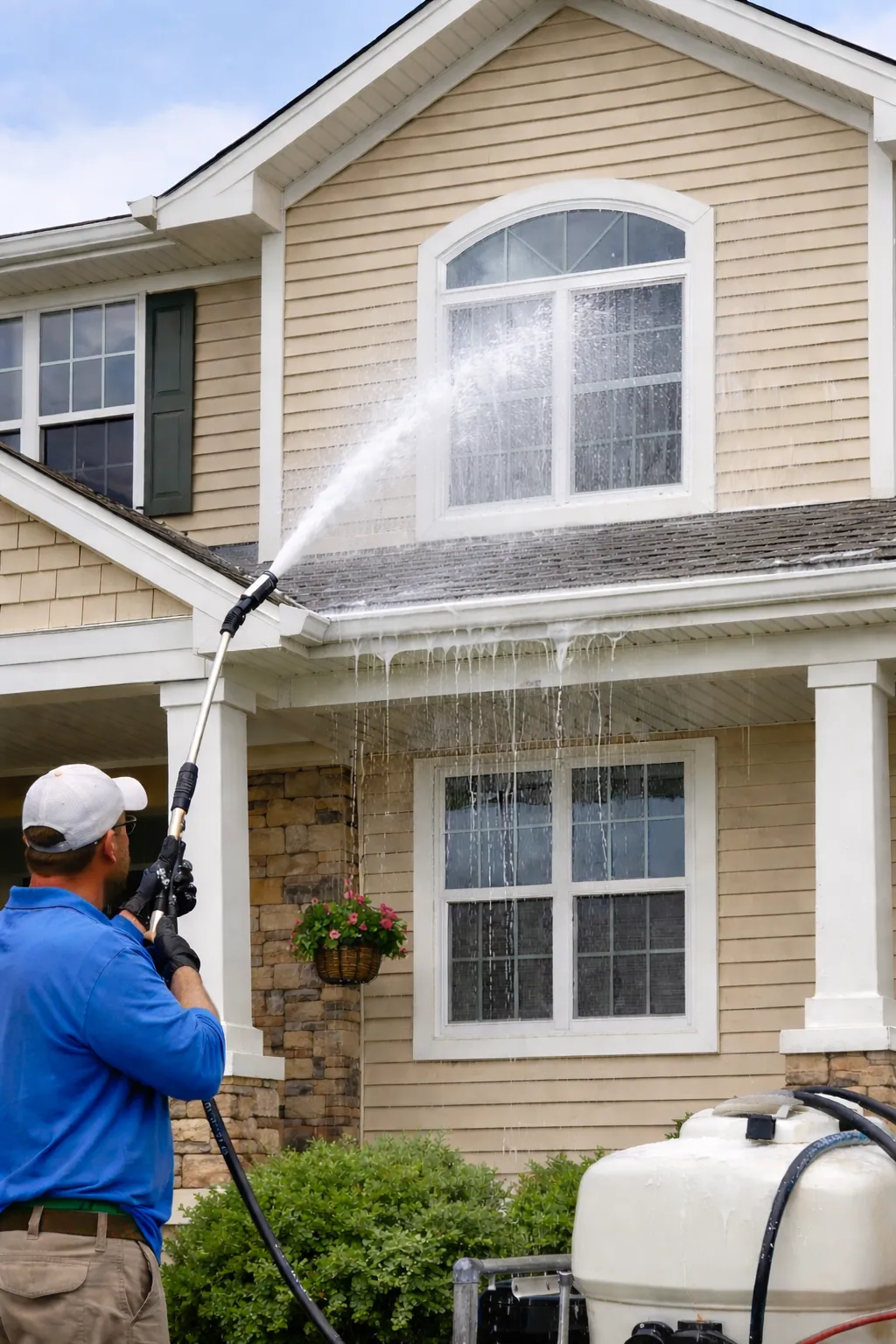
A consistent soft washing workflow follows inspection, pre-treatment protection, solution application, dwell, rinse, and final inspection. Technicians first inspect for damaged shingles, loose siding, or penetration points that need repair before cleaning. Landscaping and delicate features are shielded; solutions are mixed to manufacturer or system guidelines; application uses low-pressure pumps and suitable nozzles to coat surfaces evenly; dwell time is adjusted by contaminant load; and a gentle rinse removes loosened material. Safety, plant protection, and documented inspection support warranty and maintenance planning. Those steps scale across roofs, siding, decks, and fences with tweaks to dilution and dwell time.
Typical step-by-step cleaning flow:
- Inspect: Find weak spots and needed repairs.
- Protect: Cover landscaping and delicate fixtures.
- Apply: Low-pressure application of a biodegradable solution.
- Dwell & Rinse: Let chemicals work, then rinse gently.
- Inspect & Document: Confirm results and record for maintenance.
Best Practices for Vinyl, Stucco, and Concrete
Vinyl siding needs low-pressure application and correct solution strength to avoid warping or forcing water behind panels; stucco benefits from gentle coverage and a small-area test to check for water intrusion; concrete brightens with soft-wash pre-treatment for organic stains, but deep-set grease or oil often requires targeted pressure cleaning or specialty solvents after sanitization. Key practices include diluting per manufacturer instructions, using the right nozzle types, protecting plants and watercourses, and avoiding over-application that can harm vegetation. For heavy soiling or structural concerns, combine soft washing with localized pressure work performed by experienced technicians.
| Surface | Best Practice | Notes / Cautions |
|---|---|---|
| Vinyl siding | Low-pressure rinse + correct solution concentration | Avoid high pressure that can force water behind panels |
| Stucco | Gentle application with controlled dwell | Test for water intrusion and avoid oversaturation |
| Concrete | Soft-wash pre-treatment for organic soils | Deep stains may require pressure or chemical spot treatment |
| Roof shingles | Apply from eaves upward, controlled dwell | Protect gutters; use methods compatible with warranties |
| Decks & fences | Clean before sealing or staining | Rinse thoroughly and allow drying before refinishing |
Why Choose Denver’s Window Cleaning & SoftWash for Professional Soft Washing?
Denver’s Window Cleaning & SoftWash combines local experience with authorized soft-wash practices to deliver safer, standards-based cleaning and warranty-backed roof work. As a family-owned operator serving Southeast Manitoba, Kenora, Steinbach, Winnipeg, and the Whiteshell, we follow SoftWash Systems protocols and offer a 5-year warranty on roof cleaning so homeowners can feel confident in long-term results. Those advantages—regional climate knowledge, an authorized-systems approach, and roof warranty—lower risk and simplify maintenance planning for property owners who want lasting protection. Think of professional soft washing as an investment in preserving materials and curb appeal, not just a one-off cosmetic job.
What Being a SoftWash Systems Authorized Professional Means for Customers
SoftWash Systems authorization means the provider follows recognized protocols for solution mixes, equipment, and safety practices—making outcomes more predictable and reducing the chance of property damage. For customers, that translates into trained technicians, industry-approved chemistries and gear, and documented procedures aligned with manufacturer recommendations. Authorized pros usually keep records and testing that support warranty claims and follow-up, creating transparency and quality control. Choosing an authorized provider helps ensure the relationship “standards → consistent application → safer, longer-lasting clean” holds true.
How the 5-Year Roof Cleaning Warranty Gives Confidence
A 5-year warranty on roof cleaning reduces risk by aligning the provider’s incentives with sustained performance. If regrowth or treatment failure occurs under defined conditions, the warranty provides remediation. For homeowners, that means documented recourse and an expectation of repeatable results; it also clarifies recommended maintenance timing. When reviewing warranties, ask about coverage limits, exclusions (such as pre-existing damage), and maintenance steps required to keep the warranty valid. The warranty clarifies responsibilities and complements the technical work with contractual assurance.
How to Request a Free Soft Washing Consultation for Your Property
Requesting a free consultation usually starts by supplying your property location and a brief description of main surfaces so a technician can assess access, substrate types, and likely treatments before an on-site visit. A typical consultation includes a visual inspection, an evaluation of contaminants and materials, a proposed treatment plan with estimated solution strengths and dwell times, and an outline of protection measures and warranty terms. Clear communication during this process reduces surprises and helps the provider recommend hybrid approaches when needed. Below is a simple sequence to request and prepare for a soft washing consultation.
- Provide property details: Location, main surfaces, and visible issues.
- Schedule an inspection: Pick a convenient time for on-site assessment.
- Receive a treatment plan: Expect a written plan with scope, protections, and warranty details.
- Approve and schedule service: Confirm dates and any access or prep needs.
After the consultation you’ll receive a transparent estimate and a service timeline, which keeps expectations aligned and helps plan seasonal maintenance. If you’re in our service area, Denver’s Window Cleaning & SoftWash can arrange a local consultation and review warranty and follow-up options directly.
What to Expect During the Soft Washing Service
On service day, expect a clear sequence: arrival and a brief site review, protective setup, solution mixing and calibrated application, dwell-time monitoring, a gentle rinse, and a final walk-through with you. Technicians should explain safety steps—plant protection, runoff control, and post-service cleanup—and document pre- and post-conditions for warranty records. Typical communication covers estimated duration, access needs (gates, water supply), and confirmation of treated materials. After completion, the crew will share care tips and recommended maintenance intervals to help preserve results and warranty coverage.
How Denver’s SoftWash Serves Southeast Manitoba, Kenora, and Nearby Areas
Denver’s Window Cleaning & SoftWash works locally across Southeast Manitoba and the Kenora area, including Steinbach, Winnipeg, and the Whiteshell. That regional focus means technicians understand seasonal timing, common algae and moss patterns, and local runoff and plant-protection concerns. Local experience leads to more accurate scheduling, realistic longevity expectations, and practical maintenance advice. To book a consultation in these communities, call to discuss property details and availability with one of our local representatives.
Why choose a local, authorized provider:
- Regional knowledge: Smarter timing and treatment choices.
- Standards-based process: Authorized-system practices reduce risk.
- Warranty support: Clear, documented assurance for roof work.
This completes the operational guidance and local contact information to help property owners weigh professional soft-wash services.
Frequently Asked Questions
What is the difference between soft washing and traditional cleaning methods?
Soft washing uses low pressure plus chemical solutions to remove biological growth, while traditional pressure washing relies on high-pressure water to strip dirt and grime. Soft washing targets organisms at the root, which makes it safer for delicate surfaces like shingles and painted wood while still eliminating algae, mold, and mildew effectively.
How often should soft washing be performed on residential properties?
Frequency depends on local climate, surface type, and how quickly organic growth returns. A common recommendation is every 1–2 years for most homes. In humid or rainy regions, more frequent cleanings may be necessary. Regular maintenance keeps appearances fresh and extends material life.
Can soft washing be used on all types of surfaces?
Soft washing works well on roofs, vinyl siding, stucco, painted wood, and composite decking, among others. Some surfaces—like concrete with deep oil stains—may need a combination of soft washing and targeted pressure cleaning. A professional assessment will identify the best approach for each surface.
What safety measures should be taken during the soft washing process?
Technicians should protect landscaping and delicate features, wear appropriate personal protective equipment, and manage runoff to avoid contaminating water sources. A pre-inspection to spot hazards or repairs is also essential to ensure a safe, effective clean.
Are the chemicals used in soft washing environmentally friendly?
Yes—soft wash formulas are typically biodegradable and designed to minimize environmental impact when applied and rinsed correctly. Choose a reputable provider that follows best practices for application and runoff management to protect plants and local waterways.
What should homeowners do to prepare for a soft washing service?
Clear the area around surfaces to be cleaned by removing furniture and decorations, point out any problem spots to the provider, and ensure technicians have access to water and gates if needed. Communicate any special concerns before the crew arrives.
How can homeowners maintain their property after soft washing?
Maintain results with periodic inspections and timely touch-ups when you notice regrowth. Keeping gutters clean and ensuring proper drainage will reduce moisture buildup and slow organic growth. Following a regular care schedule preserves both appearance and material life.
Conclusion
Soft washing is a safe, effective way to protect and refresh your home’s exterior. Using biodegradable solutions and low-pressure techniques, the method restores curb appeal while extending the life of roofs, siding, and other finishes. Investing in professional soft washing preserves value and reduces long-term repair costs. Contact us to learn how our experienced team can help you keep your property looking and performing its best.