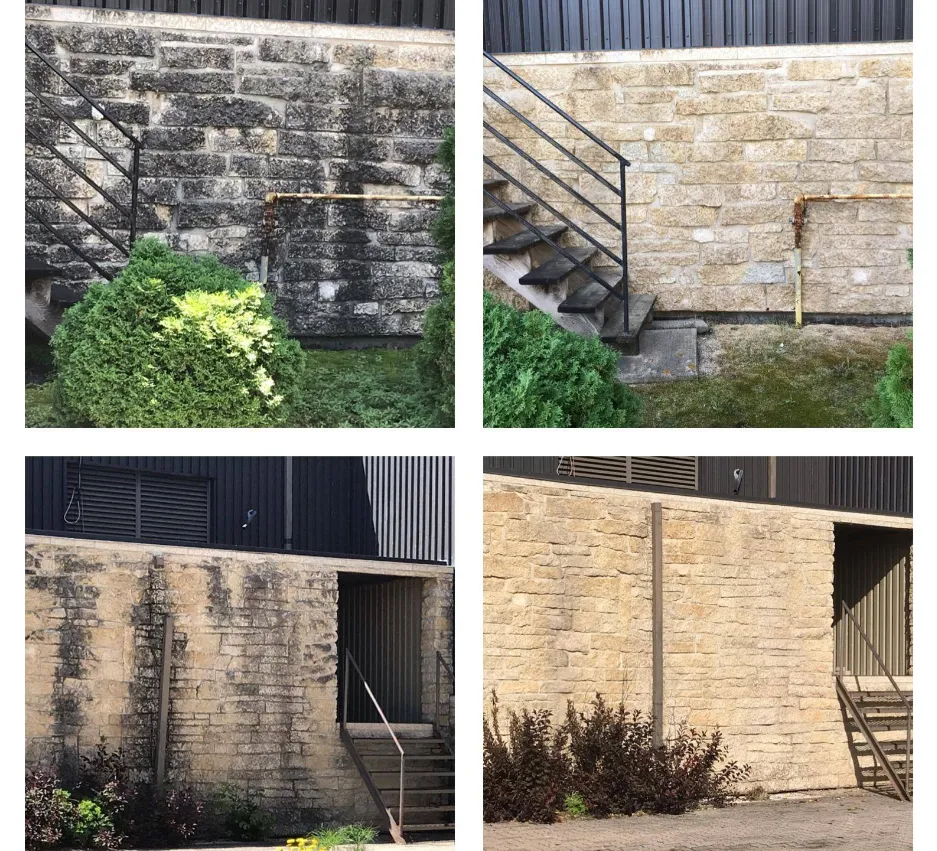
Soft washing eliminates moss and algae by applying a low-pressure, biodegradable cleaning solution that kills organic growth at the root without damaging shingles. Denver’s Window Cleaning & SoftWash uses this method to protect roofing materials, preventing the deterioration caused by organisms like Gloeocapsa magma that can shorten shingle lifespan by five to ten years.
What makes moss and algae a threat to your property?
Moss and algae actively destroy roofing materials. These organisms feed on shingle components and accelerate structural deterioration, leading to expensive consequences for property owners.
How do algae damage asphalt shingles?
A cyanobacterium called Gloeocapsa magma causes those dark black streaks spreading across roofs throughout Southeast Manitoba. This organism consumes the limestone filler inside asphalt shingles. The feeding process weakens shingle integrity from within. Over time, the protective granule layer loosens and the underlying asphalt becomes exposed to UV radiation and moisture. Left untreated, this biological feeding cycle shortens roof lifespan significantly and forces premature replacement.
Why does moss cause structural problems?
Moss retains moisture against roofing surfaces for extended periods. That trapped water seeps under shingle edges during freeze-thaw cycles common in Manitoba winters. The expansion and contraction pries shingles loose. Gaps then allow water infiltration into the roof deck. Denver’s Window Cleaning & SoftWash treats harmful contaminants such as mildew, mold, bacteria, and algae to prevent this cascading damage. The company’s Steinbach roof washing services use low-pressure soft washing to eliminate these organisms without harming roofing materials.
What happens when property owners use high-pressure washing instead?
High-pressure washing strips protective granules from asphalt shingles. This aggressive method voids manufacturer warranties. According to industry data, improper pressure washing cuts roof life by 30 to 50 percent. Granule loss exposes the asphalt layer directly to sun and weather. The roof then deteriorates at an accelerated rate. Soft washing eliminates the biological threat while preserving every shingle’s factory-applied protection.
How does soft washing safely remove moss and algae?
Soft washing removes moss and algae through a low-pressure chemical application that kills organisms at the root. The method operates at under 150 PSI, which eliminates the risk of surface damage common with high-pressure alternatives. Homeowners who delay treatment face a shortened shingle lifespan of 5 to 10 years, according to Acme Pressure Washing’s 2026 guide on safe algae removal.
What makes the chemical solution effective against root-level growth?
The process relies on specialized biodegradable cleaning solutions that neutralize moss, algae, and lichen at their source. These solutions break down organic buildup completely rather than blasting away only surface-level growth. A diluted sodium hypochlorite solution sits on the affected area for 15 to 20 minutes before a gentle rinse completes the treatment.
How does the application process protect delicate surfaces?
Technicians apply the cleaning mixture at pressures far below what would strip granules from asphalt shingles or etch siding materials. Denver’s Window Cleaning & SoftWash emphasizes soft washing over pressure washing for most exterior cleaning projects. The company holds the distinction of being the only SoftWash Systems Authorized Professional accredited company in Manitoba, which confirms adherence to manufacturer-recommended protocols.
The approach differs fundamentally from pressure washing. A comparison of the two methods helps property managers understand the safety advantage:
| Factor | Soft Washing | Pressure Washing |
|---|---|---|
| Pressure level | Under 150 PSI | 1,300–2,800 PSI |
| Primary mechanism | Chemical breakdown | Physical force |
| Roof safety | Manufacturer-recommended | Voids most warranties |
| Longevity of results | Kills roots, prevents regrowth | Surface-only removal |
For a deeper look at how these methods compare across different exterior surfaces, the guide on soft washing vs. pressure washing explains suitability factors in detail. The numbered steps below outline the standard soft washing procedure:
- Inspect the roof or siding to identify all areas of moss, algae, and lichen colonization.
- Apply the biodegradable cleaning solution at low pressure, ensuring full coverage of affected zones.
- Allow the solution to dwell for 15 to 20 minutes so it penetrates and neutralizes root structures.
- Rinse the surface gently with clean water, carrying away dissolved organic matter without dislodging protective granules.
What surfaces benefit most from soft washing?
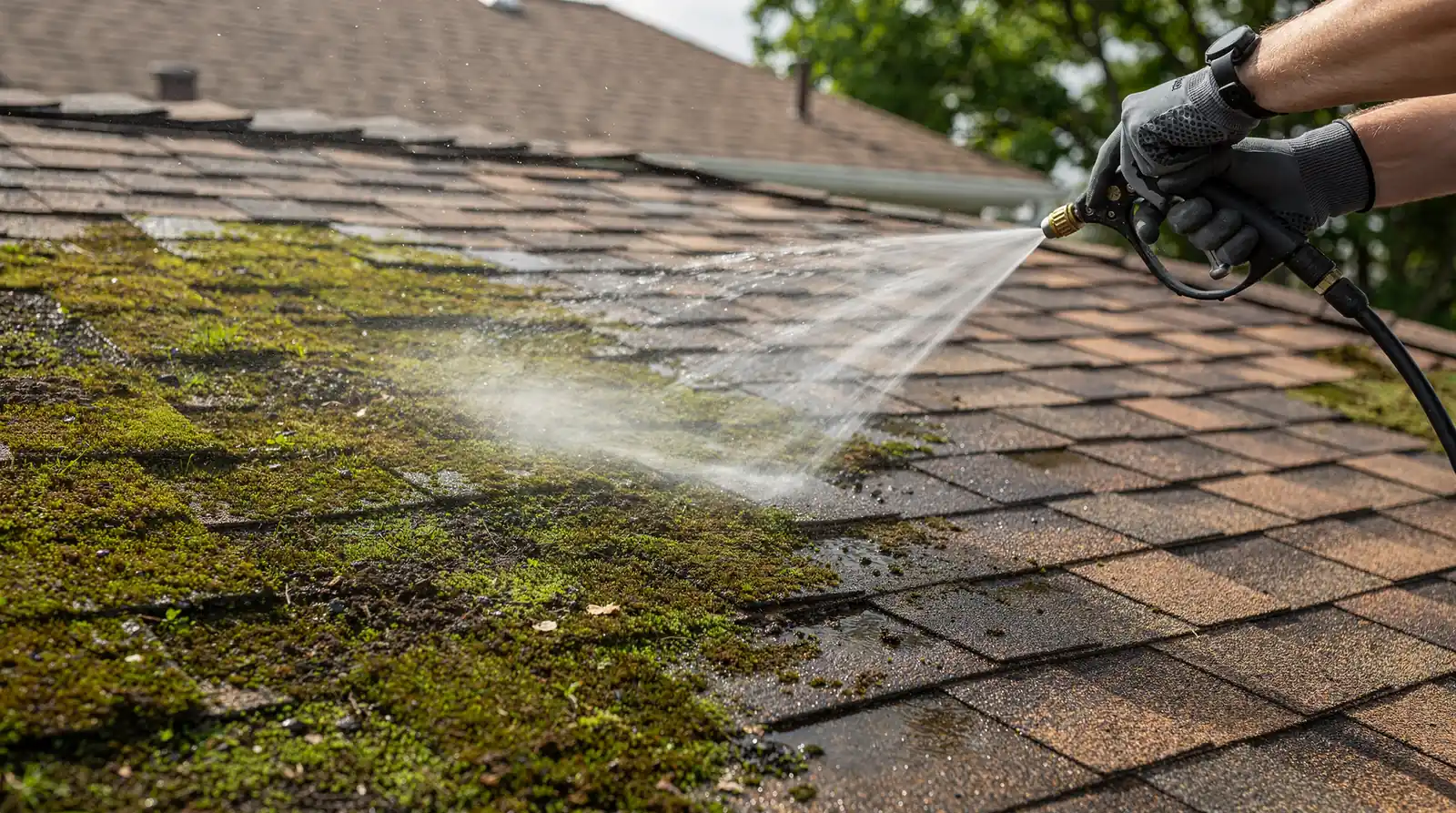
Soft washing delivers safe, effective cleaning across a wide range of exterior surfaces. Asphalt shingle roofs gain the most critical protection, since soft washing is the manufacturer-recommended approach for asphalt shingle roofs. High-pressure alternatives strip protective granules and void warranties. The low-pressure method preserves roofing materials while eliminating organic growth at its source.
Denver’s Window Cleaning & SoftWash assesses each property to select the ideal cleaning method. The company’s full service range includes window cleaning, standard pressure washing, and soft washing. This flexibility ensures every surface receives appropriate treatment.
Which siding materials are safest to soft wash?
Soft washing safely cleans vinyl, stucco, painted wood, and fiber cement siding. The specialized cleaning solutions break down dirt and biological buildup without eroding paint or etching surfaces. Property owners across Southeast Manitoba and Kenora rely on this approach for lasting results.
How does soft washing protect commercial building exteriors?
Commercial properties with delicate architectural finishes benefit from the controlled application of low-pressure cleaning solutions. The method prevents water intrusion behind cladding and avoids the surface scarring common with high-pressure washing. Denver’s Window Cleaning & SoftWash serves both residential and commercial clients, applying the same careful assessment to every project.
The process also proves ideal for secondary surfaces like soffits, fascia, and decorative trim. These areas accumulate grime but cannot withstand aggressive washing. For properties in Winnipeg, the company’s soft washing solutions extend the same protective cleaning to urban homes and businesses. Every surface receives treatment matched to its material tolerance and condition.
What are the steps in a professional soft wash process?
A professional soft wash process follows a structured sequence that kills organic growth at the root and sanitizes surfaces without high-pressure damage. Skipping any step risks incomplete removal and rapid regrowth, shortening the lifespan of roofing and siding materials.
What happens during the initial property assessment?
Every project begins with a thorough property inspection. Denver’s Window Cleaning & SoftWash approaches each job as a consultant, asking questions to uncover the client’s specific needs before discussing the available options. The company selects the ideal cleaning method only after this assessment, ensuring the approach matches the surface type and contamination level.
How is the cleaning solution applied and activated?
Technicians apply a diluted sodium hypochlorite solution at under 150 PSI, a pressure low enough to protect shingles and delicate finishes. The solution then dwells on the surface for 15 to 20 minutes. This dwell time is critical. It allows the cleaning agent to penetrate and kill organisms like Gloeocapsa magma, the cyanobacterium responsible for those dark roof streaks, right at the root.
A gentle rinse follows the dwell period, washing away the dead organic matter without dislodging granules or etching surfaces. The treatment does more than clean. It sanitizes the exterior, eliminating harmful contaminants such as mildew, mold, bacteria, and algae in a single application. This sanitization step is what prevents rapid regrowth and keeps surfaces cleaner longer.
For a deeper look at how this method compares to traditional pressure washing, the company’s guide on soft washing as an exterior cleaning method explains the chemical protocols and equipment used.
What surfaces benefit most from this sequence?
Asphalt shingle roofs gain the most from this low-pressure, high-dwell approach. The method also safely restores vinyl siding, stucco, wood finishes, and painted surfaces. Each material receives a tailored solution strength and dwell time based on the initial assessment findings.
How do you choose a professional soft wash specialist?
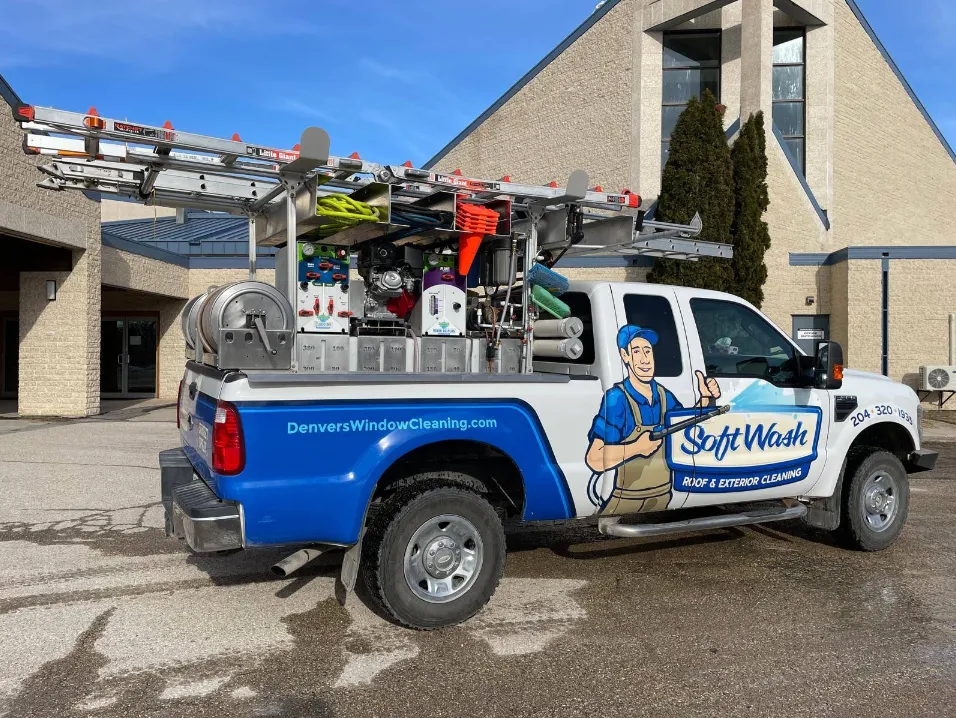
Selecting a qualified soft wash specialist protects a property from damage while ensuring moss and algae are removed completely. The wrong choice risks shingle loss, warranty voiding, and regrowth within months. A methodical evaluation of credentials, methods, and guarantees separates certified experts from pressure-washing operators who simply added a chemical tank.
What credentials should a soft wash specialist hold?
A legitimate specialist carries manufacturer-backed certification, not just a business license. Denver’s Window Cleaning & SoftWash holds a distinction no other provider in the province can claim: the company is the only SoftWash Systems Authorized Professional accredited in Manitoba. This certification confirms training in proper chemical dilution, dwell times, and low-pressure application techniques that asphalt shingle manufacturers require. Without it, a contractor may default to high-pressure methods that strip granules and void roof warranties.
How does a free consultation reveal a company’s expertise?
A thorough consultation exposes whether a company diagnoses problems or simply quotes a price. Denver’s Window Cleaning & SoftWash offers a free, no-obligation consultation to assess each property’s specific needs. During this visit, a specialist identifies the organisms present, evaluates surface conditions, and explains the cleaning approach. Vague estimates without an on-site inspection signal a transactional operation rather than a consultative partner.
The evaluation process follows a clear sequence:
- Schedule the consultation during business hours, Monday to Friday from 8:00 AM to 5:00 PM.
- Walk the property with the specialist to pinpoint moss, algae, and lichen locations.
- Review the proposed treatment plan, including the sodium hypochlorite concentration and rinse procedures.
- Confirm the warranty terms and expected results timeline before authorizing work.
Longevity in the local market provides another filter. Founded in 2006 by Denver and Tammy, the family-owned company has served Southeast Manitoba for nearly two decades. A track record spanning almost 20 years demonstrates consistent service quality that newer, unproven operators cannot match. Property managers and homeowners gain confidence knowing the specialist has weathered seasonal demands and refined its processes over thousands of projects.
FAQ
How does soft washing remove moss and algae without damaging my roof?
Soft washing applies a low-pressure biodegradable solution that kills moss and algae at the root. The method operates at under 150 PSI, preserving shingle granules and preventing deterioration.
Why is high-pressure washing harmful to asphalt shingles?
High-pressure washing strips protective granules from asphalt shingles and voids manufacturer warranties. Improper pressure washing cuts roof life by 30 to 50 percent.
What makes the cleaning solution effective against root-level growth?
The biodegradable solution neutralizes moss, algae, and lichen at their source. A diluted sodium hypochlorite solution sits on the area for 15 to 20 minutes before a gentle rinse.
Conclusion
Soft washing eliminates moss and algae safely by killing the organisms at the root with a low-pressure, biodegradable solution, then rinsing away the dead matter without damaging shingles or siding. This process protects your roof’s warranty and extends its lifespan, making it the clear choice for any homeowner serious about long-term property care. Schedule a professional assessment to ensure your home receives the same thorough, surface-specific treatment.